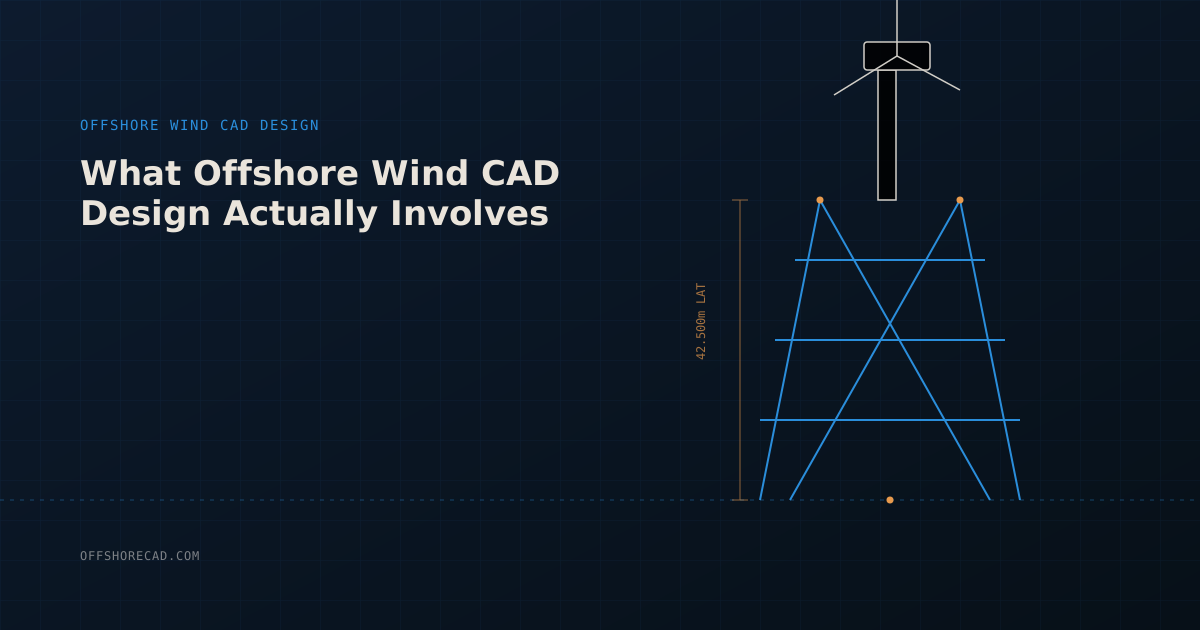
Offshore wind CAD design is not general mechanical drafting scaled up. Foundations, transition pieces, and platforms are structural steel components exposed to fatigue loading, corrosion, and marine conditions over a 25-plus year design life. The documentation has to reflect that from the first drawing.
This changes what "CAD design" actually means on these projects: geometry is only part of the deliverable. Weld details, plate thickness callouts, and corrosion protection specifications are as central to the drawing set as the shape of the structure itself.
Most offshore wind CAD design work centres on a handful of structural elements: monopile or jacket foundations, the transition piece connecting foundation to tower, boat landings and access platforms, and secondary steel such as ladders, walkways, and J-tubes for cabling.
Each of these has its own documentation requirements. A jacket foundation, for instance, needs full bracing and node connection drawings with weld maps, while a transition piece needs precise flange and bolt-circle dimensioning to match the tower interface exactly.
Offshore wind structures are typically designed and documented to DIN and EN structural steel standards, alongside project-specific certification requirements from bodies such as DNV. These standards dictate tolerances, weld symbols, and material certification callouts that have to appear correctly on every drawing.
A CAD designer working on offshore wind without direct exposure to these standards tends to produce geometrically correct but technically incomplete drawings — missing the annotations a certifying body or fabricator actually needs to sign off the work.
Offshore wind CAD design rarely happens in isolation. Structural models need to stay coordinated with electrical routing (cable J-tubes and conduits), corrosion protection systems, and installation planning — all of which depend on the same structural geometry staying consistent across disciplines.
This is why parametric, coordination-ready models matter more here than almost anywhere else in mechanical design: a late dimension change in the foundation model has to propagate correctly to every discipline working from it, not create silent conflicts.
Direct experience with offshore wind foundations and structural steel — not general industrial CAD — is the main differentiator. Ask specifically about DIN and EN standards familiarity, weld detailing experience, and whether models are delivered in a coordination-ready, editable format.
OffshoreCAD's offshore wind and steel structures work draws on hands-on design experience from offshore wind projects in Germany, applied to structural CAD documentation for foundations, platforms, and steel structures delivered to German and international standards.